Guppy Fish Care – The Ultimate Beginner Guide For This Beautiful, Easy To Keep Fish
Guppy Fish Tank Care: Description & Life Span of the Peaceful Guppy
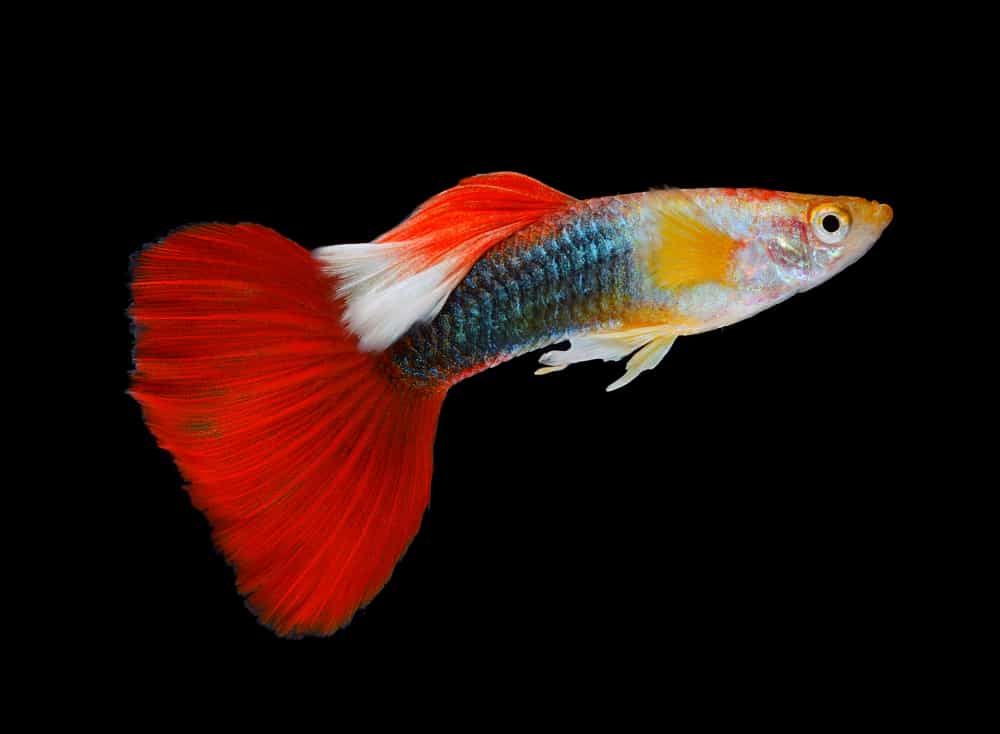
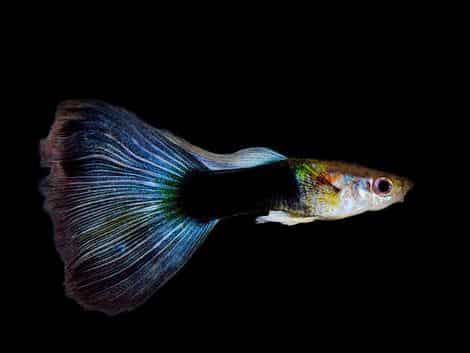
Poecilia reticulata is most commonly known as the guppy fish, and they’ve earned the nicknames “million fish” and “rainbow fish” for good reason. In the wild, male guppies sport random spots of color. But through selective breeding, hobbyists have transformed these simple patterns into a dazzling array of brilliant colors and fin shapes that make setting up a vibrant guppy fish tank a true delight.
Lifespan, Size, and General Characteristics
Under the right conditions, guppies can live up to five years. They remain small, with males growing to a modest 1.5 to 2 inches (3.8 to 5 cm) and females reaching a slightly larger 2.5 inches (6.3 cm). Their small size and peaceful nature make them ideal inhabitants for a well-maintained community guppy fish tank.

This article may be quoted and the pictures used. Be kind and provide a link back to this page from the quote.
If you like, here is a done for you link. Copy and paste with the quote, then test the link:
Setting Up A Guppy Fish Aquarium
Guppies may be small, but they reproduce at a breakneck pace. While a minimum of one gallon per fish is a good rule of thumb for a lightly stocked tank, a single pair can quickly multiply and overcrowd a 10-gallon guppy fish tank in just a couple of years. Trust me, I’ve seen a handful of guppies turn into a teeming school that completely changed the dynamics of a tank.
Water Parameters: The Foundation of a Healthy Guppy Fish Tank
Guppies are famously hardy, which is part of their appeal. However, they still thrive best within specific water parameters:
* pH: 7.0–8.0 (neutral to slightly alkaline)
* Hardness: 8–12 dGH is ideal
* Ammonia: Must be 0 ppm. Any trace of ammonia is toxic and a sure sign something is wrong with your guppy fish tank’s biological filter.
* Nitrate: Keep it under 40 ppm. Lower is always better. In my planted 40-gallon tank, I manage to keep nitrates around 40 ppm with frequent, diligent water changes.
* Filtration: Keeping Your Tank Pristine
When fed properly, guppies produce minimal waste. A simple hang-on-back filter is often sufficient for most setups. I personally run two canister filters on my 40-gallon tank. While this might seem like overkill, it provides peace of mind, as I never have to worry about ammonia or nitrite spikes. A robust filtration system is a cornerstone of a healthy and stable guppy fish tank.
Substrate and Decor: Creating the Perfect Habitat
Guppies aren’t fussy about what’s on the bottom of their tank. You can use gravel, sand, or even go bare-bottom—they will be perfectly fine. Your choice of substrate is purely a matter of personal aesthetic preference.
Some people recommend providing hiding spots for guppies, but in my experience, they rarely use them. Live plants, however, are a fantastic addition. Not only do they look beautiful, but they also significantly improve water quality by absorbing nitrates and providing a natural environment that makes a guppy fish tank feel more like a slice of nature.
What Tankmates Can You Have In Your Guppy Tank
Important caveat to remember when stocking your guppy fish tank is to avoid large, aggressive fish. Their beautiful flowing fins and vibrant colors can be irresistible targets for fin-nippers, and their small size makes them easy prey for larger predators.
Because guppies are peaceful, you want to choose other peaceful fish as tankmates. Here is a small selection of compatible species that will live in harmony with your guppies:
- Other Guppies
- Other livebearers like Mollies and Platies
- Corydoras
- Zebra Danios
- Betta Fish (with caution, as some can be aggressive)
- Neon tetras
- White Cloud Minnows
Do Your Own SEO
You Can Get My DIY SEO System For Only $17.
Why pay an SEO person hundreds per month when you can do it yourself?
Dear Website Owner,
As you read this bear in mind that I'm not some internet website Guru. I'm just an average guy who has figured out a little about website SEO.
You originally started your blog to make money. Now the website is just sitting there, kind of taking up space online and taking money out of your pocket every month. Been there, done that. For example, my aquarium blog has been around since 2019. I work on it for a while, then set it aside (again!).
About a year ago I started teaching myself SEO by watching hundreds of hours of YouTube videos. I then developed my own DIY SEO system—a simple system that almost anyone could use. I tried it and it worked.
Before you dismiss this, here are a few of my results (I use Bing search for this snapshot because I believe Google currently relies too heavily on A.I. and sponsored ads):
#4 for Chinese Algae Eater Care (plantedaquariumexpert.com/chinese-algae-eater)
#1 for Rosette Sword Plant (plantedaquariumexpert.com/rosette-sword)
#1 for What to Feed Your Chinese Algae Eater (plantedaquariumexpert.com/feed-chinese-algae-eaters)
Get more information by tapping this box.
What Should You Feed Your Guppies?
What Should You Feed Your Guppies?
Overfeeding is a common mistake that can quickly lead to poor water quality in any aquarium. Ideally, guppies should be fed only twice a day, and the portion should be no more than what they can consume within two minutes. A varied diet is key to keeping them healthy and vibrant.
Here is a list of foods guppies will thrive on:
* Live foods like wingless fruit flies, blackworms, and vinegar worms
* Frozen foods like brine shrimp (avoid bloodworms, as they can cause digestive issues and even death in guppies and many other aquarium fish)
* Flakes, pellets, and tablets
* My small fish like decapsulated brine shrimp eggs
* Cooked, frozen, and blanched vegetables and fruits like peas, zucchini, cucumbers, and spinach.
Common Diseases in Your Guppy Fish Tank
Despite their delicate appearance, guppies are surprisingly hardy. However, poor water conditions, stress, or a lack of proper quarantine can make them vulnerable to illness. Most guppy diseases can be traced back to two main culprits:
- Poor aquarium maintenance, which often means infrequent cleaning.
- Weak filtration, i.e., an inadequate or poorly functioning filtration system.
Tetrahymena Parasites
These parasites are a constant threat to any guppy fish tank. I use UV sterilizers to help control them, though they are only partially effective.
Ich (White Spot Disease)
Ich usually appears as a result of poor aquarium maintenance. Symptoms include white specks on the body and fins, red fins, and the fish rubbing against surfaces. It can also cause a loss of appetite.
Treatment: Commercial medications with malachite green, formaldehyde, or copper sulfate are effective.
Fin & Tail Rot
This bacterial disease manifests as fraying, holes, or white-edged damage on the fins and tail. It can be caused by bacteria, fungus, ammonia burn, or aggressive fin-nipping tankmates.
Treatment: Isolate the affected fish, perform a significant water change, and use antibiotics or antifungals as needed.
Velvet
Velvet looks like a dusting of gold or rust on the fish’s skin and fins. If left untreated, it can lead to severe bleeding and death.
Treatment: Copper-based medications and a large (90%) water change after symptoms clear.
Guppy Disease (Tetrahymena)
This specific disease targets guppies. Symptoms mimic Ich, but also include swelling, lethargy, and grey, stringy mucus.
Treatment: Malachite green and copper medications may help if caught early.
Reality Check: There is no permanent cure. If you keep guppies, you likely have Tetrahymena. I manage it with UV sterilization and heavy, regular water changes, but it’s a constant battle.
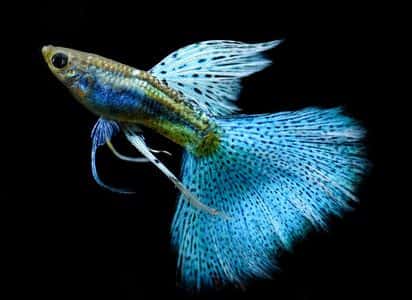

My pick for Best of Amazon "guppy fish"
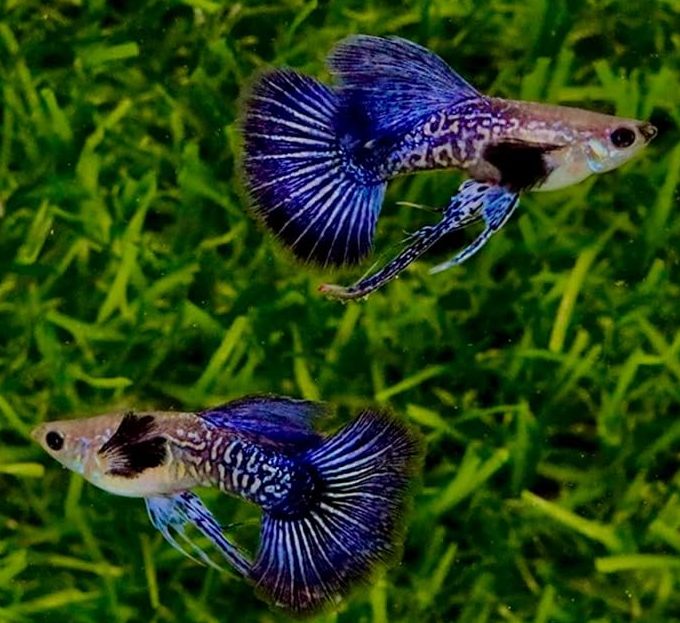
Blue Dragon Guppies
⇒ Beautiful blue snake skin colors
⇒ Large tailfins
⇒ This fish has excellent ratings
Tap this box to view current price.
Guppy Mating and Reproduction
Breeding guppies is almost effortless. Simply place a male and a female in a guppy fish tank, and you’ll soon have fry. Give it two years, and your tank might be so packed with guppies you’ll wonder where the water went. They’re called “million fish” for a reason.
Selecting Mating Pairs
Guppies aren’t choosy about their mates, but if you’re breeding for specific traits, select healthy, vibrant specimens with the colors, patterns, and fin styles you want to pass on. It’s important to note that females often arrive already pregnant, so isolate a new female for a few months to clear out any stored sperm before introducing your chosen male.
Breeding Setup
While guppies will breed in a communal tank, a dedicated breeding tank gives you more control over the genetics of the offspring. Communal tanks are a cheaper and effective way to breed guppies, but expect random results.
Mating Behavior
Males court females by flaring their fins and dancing around them. Once a female accepts, the male uses his gonopodium to transfer sperm. A female can store this sperm for up to three months and give birth multiple times without further mating. To reduce stress on the females, it’s best to keep two females for every male in your guppy fish tank.
Gestation and Fry Care
Pregnant females develop a dark gravid spot near their belly. Gestation lasts about 30 days, producing anywhere from 20 to 60 fry. The fry instinctively hide, so provide plenty of live plants or other cover, especially in communal tanks, as adults may eat them.
For the best survival rates, move a pregnant female to a separate breeding tank, then relocate her to the main tank after she gives birth. The fry need clean water and nutritious food, but otherwise require no special care.
How to Tell if a Guppy Is Pregnant
“The easiest way to tell if a guppy is pregnant is to look for a dark spot under her tail toward the backside of the stomach. This dark spot is called a gravid patch. As the babies grow, this guppy gravid spot will increase in size while also becoming darker. In the final stages of pregnancy, the spot will become black, and the guppy will look very bloated or fat.”
Guppies – A final thought
Guppies are on my list of fish I would never own again, precisely because of their relentless reproduction. Once you have guppies, it is incredibly difficult to get rid of them. Soon, your guppy fish tank will be overrun, and things can get ugly quickly.
If you choose to get guppies, a male-only tank is a good idea. Seriously, never buy female guppies unless you are prepared for the population explosion.
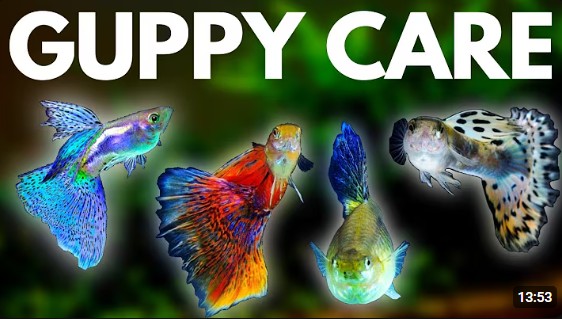
Below: Video on Guppy care. 554K views. Opens in a new tab.
References and citations:
Love scientific stuff? Here’s a PDF about guppies. It taught me that guppies have teeth!
Guppy | Freshwater, Live-bearing, Aquarium | Britannica
Livebearers Guppies (Web archive 2011)
Quick tropical aquarium fish statistics and photos for the Guppy, Poecilia reticulata
Guppy (Poecilia reticulata) – Species Profile
Other pages on this site:
⇒ 5 easiest fish for beginners
⇒ Planted aquarium without substrate
⇒ How to keep freshwater shrimp
⇒ 10 fast growing plants to help control algae in the planted aquarium
⇒ Taking photos of your aquarium using your smartphone
⇒ Aquarium Hobbyist Books & Gifts
⇒ My Top 3 Steps To Have Healthy Fish and A Healthy Aquarium
Breeding Guppies