
Discus Fish Care – The Ultimate Beginner Guide For This Beautiful And Majestic Fish
Key Takeaways for Discus Fish Care
* Tank Size: For even a small group of Discus a minimum of 90 gallons is suggested.
* Water Parameters: Discus require soft water with a low pH (6.5 or below) and warm temperatures (84-86°F or 29-30°C).
* Filtration: Perfect filtration is essential to maintain water quality and the health of your fish.
* Maintenance: Daily water changes may be necessary to keep the tank clean. You will also need to know how to properly prepare the replacement water.
* Diet: What to feed Discus to provide the protein-rich diet they need.
* Tankmates: You should carefully select compatible tankmates.
* Breeding: Learn how to successfully breed discus fish.
Discus have a reputation for being finicky, but that’s only because they require specific care. If you’re ready to go beyond simply “keeping” them and learn how to truly care for them, we’ll cover everything you need to know about successfully keeping Discus in your home aquarium.
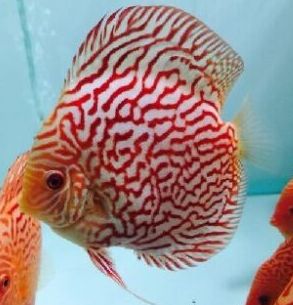
Minimum Tank Size
Quality space is essential for Discus Fish. They need large, well-maintained aquariums with stable conditions. This means investing in the proper size aquarium and having the space in your home to accommodate a larger setup.
90 gallons is the bare minimum for a small group, but aim for 120-150 gallons to really let them flourish. If you can go bigger, do it! More space means more stability and happier discus.
Discus size and life span
In home aquariums, discus live for an average of 10 years, but can live up to 15 years, and can grow up to 8 inches. Like many fish in the home aquarium, they will eat almost anything that fits within their mouth.
Water Parameters
Discus thrive in consistently maintained, pristine, water conditions.
1. Water Temperature:
You should maintain your tank at a steady 84°F (29°C), which is right in the sweet spot of their comfort zone. For breeding, I’ll nudge it up to 86°F (30°C).
2. pH Level:
Think tropical rainforest streams – that’s what we’re aiming for. I keep my main tank pH level at 6.5.
3. Water Hardness:
Target is 4 dGH and 2.5 dKH, achieved through a combination of pure R.O. water and careful remineralization.
4. Other Parameters:
Discus Fish have zero tolerance for ammonia and nitrites – that’s non-negotiable. For nitrates, I actually aim for <5 ppm, though <10 ppm is acceptable. I’m particularly obsessive about TDS (Total Dissolved Solids), keeping mine at around 150 ppm. I’ve noticed that my Discus show their best colors and most natural behavior when TDS stays in this sweet spot.
Filtration
The Heart of Your Setup: Primary Filtration
Primary filtration is the core of your aquarium’s life support system. It’s responsible for the heavy lifting of keeping your water clean and healthy. For this, I always recommend a reliable canister filter. I personally use two cannister filters to ensure redundancy; that way, if one filter has an issue, your Discus will still have clean water. Over the years, I’ve found brands like Eheim and Fluval to be exceptionally dependable, though many other great options are available.
Layering Your Filter Media
The key to a good canister filter is the media you put inside. You should layer it strategically from top to bottom.
Mechanical Filtration
The first layer should be mechanical media, such as filter floss and sponges. This material traps large debris and waste particles.
Note: I replace my filter floss every two weeks because it’s a simple way to remove a surprising amount of gunk from the water.
Chemical Filtration
After the mechanical layer comes chemical media like activated carbon or “Purigen“. These media remove dissolved organic compounds and discoloration, which helps polish the water and make it sparkling clear. I find Purigen particularly effective at making Discus fish colors really stand out.
Biological Filtration
The final and most crucial layer is biological media, such as ceramic rings and bio-balls. This porous material provides a home for beneficial bacteria that break down fish waste. It’s a key part of maintaining a healthy nitrogen cycle in your tank. A quick tip: never clean all your biological media at once. Staggering the cleaning process helps maintain a stable, healthy bacterial colony.
UV sterilizer
And let’s not forget the power of a UV sterilizer – this amazing piece of equipment prevents disease, controls algae, and keeps your water crystal clear. I learned its value the hard way after battling a persistent algae bloom in my early days of keeping Discus.
Secondary Filtration
To complement the primary system, I always incorporate secondary filtration.
Sponge filters provide an extra layer of biological filtration, gently circulating the water while remaining safe for delicate Discus fry. I position mine in the back corners where they create gentle water movement without stressing the fish.
Last, I use a small surface skimmer to prevent protein film buildup on the surface of the water.
This article was updated August 28th, 2025
Here’s how I got this far – DIY SEO – 34 step System
Free until Nov. 21, 2025
My pick for Best Buy On eBay: Discus Fish
Pack of 3 - Blue Diamond Discus 4"
$150 plus $60 shipping - Tap to view on eBay


Reasons why I picked this fish for best on Ebay:
1. Attractiveness
2. eBay buyer favorite - 72 watchers and 39 trios sold
3. At 4" these are large fish that will only get larger.
4. This seller has many other beautiful selections - Tap here to view store.
Maintenance Schedule
Caring for your discus fish tank requires a dedicated maintenance routine. Frequency and type of care can vary depending on your goals.
⇒ Water Changes: Frequency and Amount
Frequent water changes are the most important aspect of keeping discus healthy. While many new hobbyists might find the schedule surprising, the results speak for themselves.
For show-quality discus, I recommend daily 10% water changes.
For a non show- quality tank, I aim for a 20% water change every other day.
Remember, smaller, more frequent changes are far better than large, infrequent ones. Your discus will thrive in consistently fresh, clean water.
⇒ Deep Cleaning
Once a week, perform a thorough cleaning of your tank. Use a gravel vacuum to remove uneaten food and fish waste from the substrate. A clean substrate is vital for a healthy environment or consider going substrate free.
During this weekly cleaning, it’s also a good time to perform a larger water change of 25-30%.
⇒ Replacement Water Preparation
Perfecting your replacement water is an art. Preparing your water in advance is a great way to ensure it’s ready for your tank. Here’s a look at my own routine:
* I prepare all replacement water at least 24 hours in advance in dedicated storage containers.
* Matching the temperature of the new water to the tank water temperature is crucial. Use a digital thermometer to get it as close as possible.
* I use RO/DI (reverse osmosis/deionized) water as a base and add a remineralization blend to ensure the correct mineral content.
* A high-quality water conditioner is then added, followed by a small amount of blackwater extract to create a natural biotope feel for your fish.
This article may be quoted. Be kind and provide a link back to this page from the quote.
If you like, here is a done for you link. Copy and paste with the quote, then test the link:
How To Grow Large, Healthy Discus – PlantedAquariumExpert.com
Author Bio: Don Glasgow - creator of this site
* I've been keeping fish for 24 years, including Discus, Angelfish, Betta Fish, Tiger Barbs, Bristlenose Plecos, Zebra Danios and many, many more.
* I've have been keeping planted aquariums for 23 of those 24 years. Plants I've kept include Java Fern, Sword Plants, Rosette Sword and many more.

A must watch Discus video!
Video below opens in a new tab or window.

Feeding
Discus Fish require a varied and nutrient-rich diet. This is essential for maintaining the vibrant colors and strong immune systems of discus fish. They enjoy a mix of live, frozen, and high-quality prepared foods.
Offer your Discus a selection of foods like brine shrimp, black worms, and wingless fruit flies. Be selective with dried foods; many flake and pellet fish foods contain excessive grain fillers. Instead, look at the ingredient labels for high-quality, protein-rich options.
To ensure they get a complete diet, include a beef heart mix (available frozen) and spirulina-enriched gel food.
Discus are slow, deliberate eaters, but they shouldn’t be allowed to dawdle when eating. To prevent water contamination, remove any uneaten food from the tank after five minutes.
Reference: Tony Griffitts’ Beef Heart Aquarium Fish Food Recipe
“Aquatic Foods Incorporated. I get beef heart and black worm flakes, plus freeze-dried blood worms. Oh my god. My discus goes nuts for this stuff!”
“I have grown out many discus from 1 inch+ to 5-6 inches using 4-5 feedings per day mix of beef heart mix and baby brine shrimp initially and slowly introducing dried black worms, high protein pellets and over time BH mix and BW being the staple. It is important to have a good volume of water and a regular water change cadence to keep nitrates low! For fattening fishes BH is great but does mess up the water. One of the cool tricks I learnt from another forum a few years back was to clean and freeze BH into small cubes, run it through a salad shooter and feed the shavings to the discus fishes… great food with no BH mix pieces messing up the tank.”
Reddit r/discus “What’s the best food?”

Tap the discus above to view the full size image.
You may use the image as long as you provide a
live link back to this page. https://plantedaquariumexpert.com/discus-fish/
Tankmates
The following isn’t meant to be a comprehensive list. Instead it is a good starting point.
Note: Discus may be bullied and outcompeted for food and territory by companions that are too boisterous or aggressive.
Here are a few of many good options if you want to create a community tank around your Discus.
• Rummy Nose Tetras
• Black Phantom Tetras
• Sterbai Corydoras (heat tolerant)
• Bronze Corydoras
• Panda Corydoras
• German Blue Rams
• Bolivian Rams
⇒ 20 Best Fish For Beginners – maybe there’s a Discus tank winner in here?
The Art of Breeding Discus: “A Labor of Love”
Breeding these magnificent fish is one of the most rewarding – and challenging – experiences in the aquarium hobby. Let me share what I’ve picked up through countless spawning attempts, both successful and… well, let’s call them learning experiences.
First, you’ll need a dedicated breeding setup.
I use a 75-gallon bare-bottom tank for my breeding pairs. Why bare bottom? It makes it infinitely easier to maintain the pristine conditions these fussy parents demand. I keep my breeding tank at a steady 86°F (30°C), slightly warmer than my display tanks, and maintain extremely soft water (GH around 3) with a pH of 6.2.
Selecting your breeding pair is crucial.
Forcing pairs rarely works – let them choose their own mates. In my experience, the best results come from raising a group of 6-8 young adults together and letting natural pairs form. You’ll know you’ve got a pair when you see them spending time together, cleaning a vertical surface in unison, and displaying more intense coloration when near each other.
Conditioning is everything.
I feed my breeding pairs 5-6 times daily with a variety of high-protein foods. My “breeding menu” includes beef heart, live blackworms, and high-quality frozen foods like brine shrimp. The key is variety and quality – these “parents-to-be” need plenty of energy reserves.
Breeding Behavior
The female’s ovipositor becomes more prominent, and the pair spends increasingly more time cleaning their chosen spawning site. I provide several vertical surfaces – breeding cones, large pieces of slate, and even the tank walls themselves. They’ll choose what they prefer.
Laying The Eggs
The actual spawning is a mesmerizing sight. The female lays her eggs in neat rows while the male follows closely behind, fertilizing them. Here’s where patience becomes crucial – resist the urge to peek too closely. I’ve had many spawns abandoned because of too much attention.
Hatching And Parent Care
If all goes well, the eggs will hatch in about 60 hours. This is when things get really interesting. Both parents will take turns caring for the wrigglers, fanning them with their fins to provide oxygen and remove waste. Around day 5 post-hatch, the fry become free-swimming and begin feeding on their parents’ slime coat – a unique characteristic of Discus that is adorable.
This period is critical. Some pairs are excellent parents, others… not so much. I’ve had pairs eat their fry, abandon them, or simply fail to produce enough slime coat. If this happens, don’t get discouraged – it’s normal for first-time parents to need practice. For struggling pairs, I keep cultures of newly hatched brine shrimp and microworms ready as backup.
Supplemental Feeding For The Discus Fry
The real challenge comes around day 10-14 when you need to start supplemental feeding. I use a mixture of newly hatched brine shrimp and commercial fry food, feeding tiny amounts 6-8 times daily. Water quality is absolutely crucial during this period – I do 50% water changes twice daily, being extremely careful to match the temperature and water parameters exactly.
Remember, breeding Discus is a marathon, not a sprint. It took me several attempts before I had my first successful spawn, but the sight of those tiny baby Discus growing into healthy young adults made every failed attempt worth it. Just be patient, maintain pristine conditions, and learn from each experience. Before you know it, you’ll have a tank full of your very own home-bred Discus!
FAQs
1. What are the easiest Discus to keep?
All Discus are equally challenging to care for. To make the task as easy as possible, Discus require four key things:
1. A proper tank setup, often meaning a bare bottom tank. Also, ensure that no aggressive fish are housed with your Discus.
2. Very clean water. This means being diligent—almost fanatical—about aquarium maintenance. Make sure any replacement water is soft and properly conditioned.
3. A high-protein diet.
4. Warm water temperatures between 82–86°F (28–30°C).
Following these four steps will make keeping Discus as easy as it can be.
2. What water conditions are needed for keeping Discus?
The general rule is to provide soft water at a stable temperature of 82–86°F (28–30°C).
If you want to get more precise, ideal water parameters are:
pH: between 6.0 and 7.0
Hardness: 1–15 dGH
In my opinion, the best way to achieve these conditions is by using reverse osmosis (R.O.) water.
3. Can I keep Discus if I’m a beginning fish hobbyist?
The short answer is yes, with a few caveats. First, focus on keeping your current aquarium fish alive and healthy for a while. If you can successfully maintain a tank for about a year or more, you should be ready to take on a school of Discus.

Author Bio: Don Glasgow - creator of this site
* I've been keeping fish for 24 years, including Discus, Angelfish, Betta Fish, Tiger Barbs, Bristlenose Plecos, Zebra Danios and many, many more.
* I've have been keeping planted aquariums for 23 of those 24 years. Plants I've kept include Java Fern, Sword Plants, Rosette Sword and many more.
Yes, I really did this.
My Experience With Making Money Doing an Online Interview.
I made $60 for a 1 hour interview.
A while back I participated in an online video interview. It took less than an hour, and I received a $60 Amazon gift card. The company I signed up with (Respondent) has tons of different surveys and interviews to choose from. You can only be paid with gift cards, but honestly, I got some good stuff from Amazon for an hour of my time.
It’s easy, and if you choose well, it pays well. You make money, and if you complete $75 in surveys, I’ll also earn a little ($20). Win win for both of us.
Here are some of the surveys available as I write this:
-
Snack food interview — 23 minutes — $30
-
Work in e-commerce? — 20 minutes — $100
-
Content creators — 60 minutes — $100


My pick for Best On Ebay for "Live Fishfood":
LIVE FISH FOOD: MOINA MACROCOPA EGGS (WATER FLEA)
Choice was based on:
⇒ The cost is excellent.
⇒ Live fish food, just add water.
⇒ Seller has 160 reviews all 100% positive.

Tap this box to view current price
My pick for Best On Amazon for "Corydora Catfish":
Long Fin Panda Cory
Choice was based on:
* I've never seen a long fin corydora.
* Beautiful & somewhat unusual markings.
* Fish and seller have excellent reviews


Tap this box to view current price.
Other pages on this site:
⇒ How to keep freshwater shrimp
⇒ 10 fast growing plants to help control algae in the planted aquarium
⇒ Taking photos of your aquarium using your smartphone
⇒ Aquarium Hobbyist Books & Gifts
⇒ My Top 3 Steps To Have Healthy Fish and A Healthy Aquarium

